
The spring market, traditionally New York City’s busiest real estate season, arrived with no shortage of uncertainty. Mortgage rates climbed after briefly dipping below 6% at the end of February. Inflation concerns resurfaced. Geopolitical tensions dominated headlines. Questions about the broader economy persisted. At the same time, the stock market repeatedly set record highs in May, creating a mixed backdrop for consumers and investors alike.
Yet despite those headwinds, buyers continued to show up. While Spring 2026 never approached the frenzy of the pandemic-era and abnormally low-interest-rate market, it proved more resilient than many expected. Demand continued to recover across New York City, and in Manhattan in particular, a shortage of available inventory helped keep competition alive for the most desirable properties.
At a high level, the market appears balanced. Contract activity remains healthy, inventory is available, and on the surface, neither buyers nor sellers hold a decisive advantage across the market as a whole.
But those averages hide what is increasingly becoming the defining characteristic of Manhattan and Brooklyn’s housing market: it is a two-speed market.
For sellers of desirable, move-in-ready homes that are properly priced and well-positioned, market conditions often feel very much like a seller’s market. These properties continue to attract strong interest, generate competition, and in some cases receive multiple offers. Approximately 13% of homes entering contract recently sold above their asking price, demonstrating that buyers remain willing to compete aggressively when they perceive value.
For sellers of homes that require renovation, present functional challenges, or enter the market with aspirational pricing, the experience can be very different. Today’s buyers are more discerning than they were during the pandemic years. Higher borrowing costs and greater economic uncertainty have made them less willing to overlook imperfections or stretch beyond what they believe a property is worth.
The numbers illustrate this divide. While the median discount from asking price across the market is approximately 4.1%, properties that take more than 120 days to enter contract are selling at a median discount of roughly 9%. By contrast, homes that enter contract within their first 30 days frequently trade at little to no discount and often achieve full-price or above-asking-price offers.
In other words, today’s market is not simply a buyer’s market or a seller’s market. It is both, depending on the property and how it is positioned.
Manhattan: Demand Increased, Inventory Tightened
Manhattan recorded 2,601 signed contracts this spring, nearly in line with the long-term seasonal average and slightly ahead of last year’s pace.
The bigger story, however, was inventory. Only 4,324 new listings came to market this spring, down from 4,463 last year and well below the post-pandemic years when spring supply regularly exceeded 5,000 listings. As buyers returned to the market, seller inventory failed to keep pace.
That imbalance created a market that felt more competitive than the headline statistics alone might suggest. In many ways, Manhattan became the clearest example of the two-speed market discussed above. Buyers hoping for abundant inventory and negotiating leverage often found that the most desirable homes continued to attract multiple interested parties and sell quickly.
The broader demand picture is also encouraging. After mortgage rates surged in 2022 and 2023, contract activity declined. This spring marked another step in the market’s recovery, with demand returning to levels that closely resemble the healthy, functioning market conditions of the late 2010s.
This is not a market racing back to peak pandemic activity. It is a market steadily returning to normal.
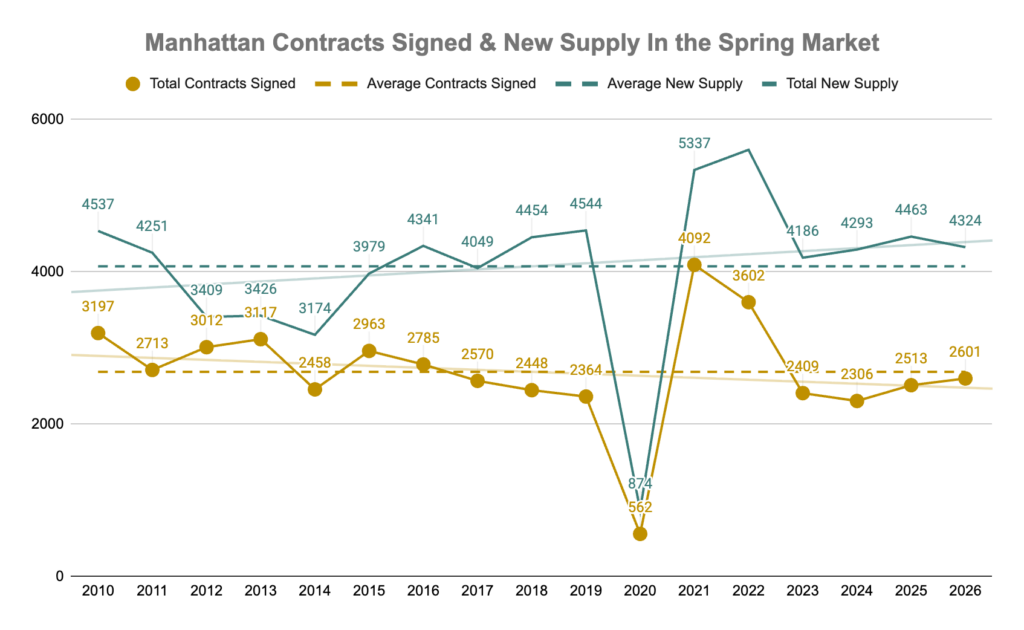
Chart 1: Contract activity has recovered toward historical norms, while new supply remains below post-pandemic highs, helping keep competition elevated for desirable properties.
Brooklyn: More Choice, More Balance
Brooklyn signed 1,459 contracts this spring, virtually identical to both 2024 and 2025.
That consistency speaks to the borough’s continued appeal. Buyers have largely adjusted to today’s interest-rate environment and continue to transact at levels above Brooklyn’s long-term average.
Unlike Manhattan, supply continued to grow. New listings increased to 2,516 this spring, up from 2,473 last year and 2,289 two years ago. More inventory has given buyers greater choice and reduced some of the urgency that characterized the market during 2020 and 2021.
Well-priced homes continue to perform, but buyers have become increasingly selective. More options mean more comparison shopping, more thoughtful decision-making, and, in some cases, greater room for negotiation.
The result is a market that feels increasingly balanced. Sellers still have opportunities to achieve strong outcomes, but buyers have more leverage than they have enjoyed in several years.
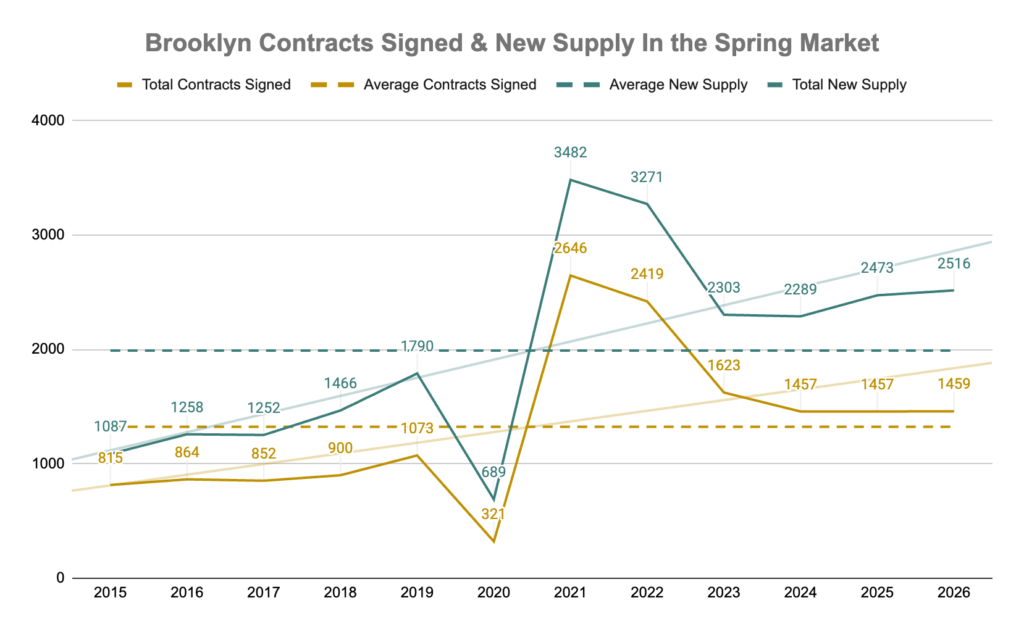
Chart 2: Contract activity has remained remarkably consistent over the past three springs, while new supply has steadily increased, creating more choice for buyers and a more balanced market.
Bottom Line
Spring 2026 demonstrated that New York City’s housing market has largely adjusted to higher interest rates. Buyers continue to transact. Sellers continue to come to market. And despite persistent economic uncertainty, both Manhattan and Brooklyn delivered healthy spring seasons.
In Manhattan, recovering demand combined with tightening inventory to create a market that felt more competitive than many expected. In Brooklyn, demand remained steady while inventory continued to build, creating a healthier balance between buyers and sellers and providing more choice than we have seen in several years.
Most importantly, the market’s averages only tell part of the story. The real estate market today rewards preparation, pricing discipline, and realistic expectations. Sellers who present their homes well and price them appropriately continue to achieve strong outcomes. Buyers who remain patient and flexible can still find meaningful opportunities, particularly among properties that require vision or improvement.
The result is not a market driven by speculation or urgency. It is a market driven by fundamentals.
Buyers are engaged. Sellers are participating. Transactions are happening.
And after several years defined by interest-rate shocks and post-pandemic adjustments, that may be the clearest sign yet that New York City’s housing market has returned to something much closer to normal.
Methodology: Spring is defined as the period from the second week of March through Memorial Day.
Data in this report were sourced from reSOURCE, UrbanDigs, Marketproof Pro, and Mortgage News Daily.
Leave a Reply