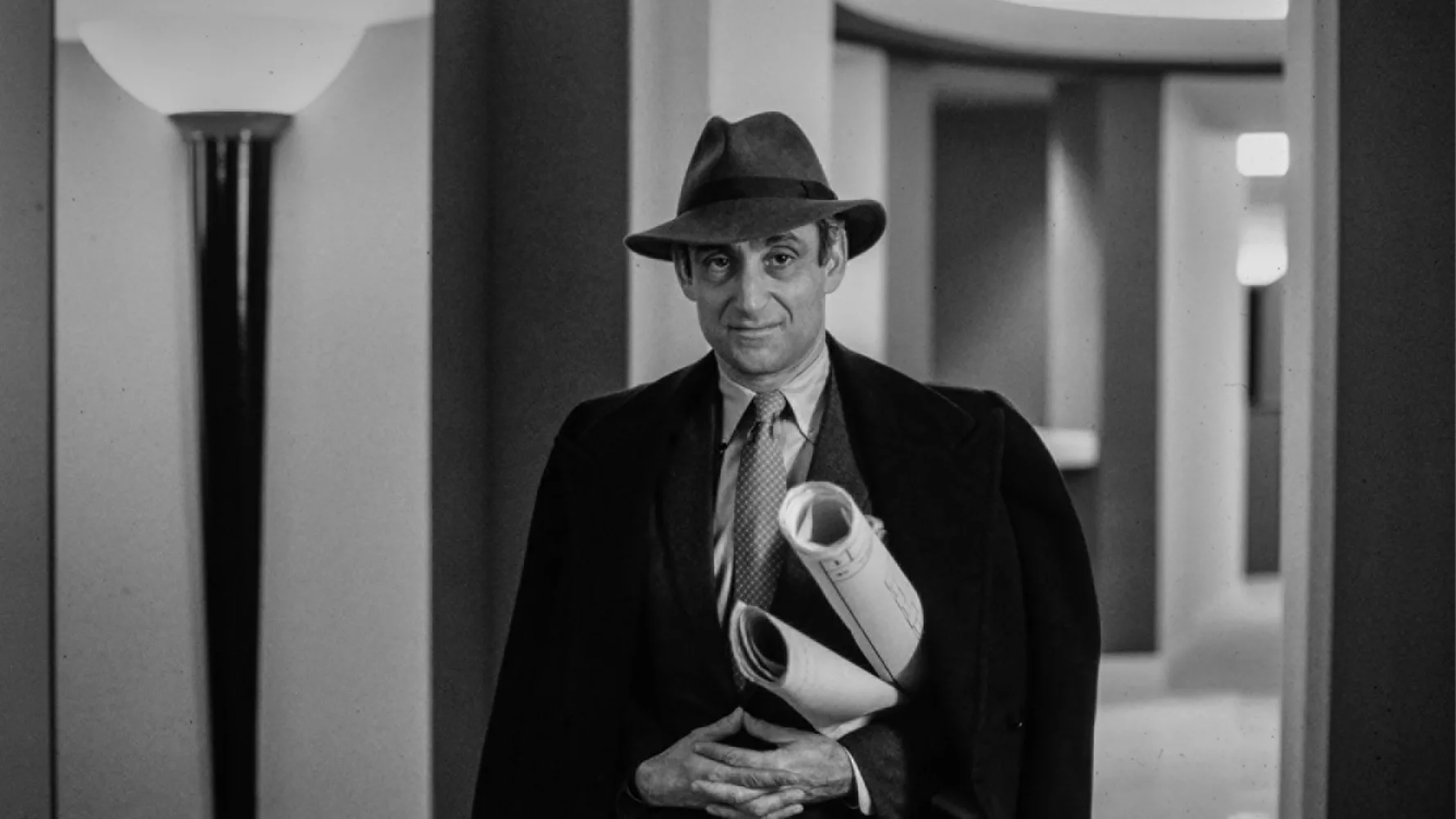
Photo Credit Peter Aaron/OTTO courtesy of RAMSA
New York lost one of its great architectural voices with the passing of Robert A.M. Stern, whose work reshaped the city’s skyline and reintroduced the enduring appeal of classic design. Mr. Stern died November 27, 2025 at age 86, leaving behind a legacy that reshaped the very notion of what luxury living meant in New York.
Born in Brooklyn in 1939, Stern studied history at Columbia University before earning his master’s in architecture from Yale School of Architecture in 1965. He went on to found Robert A.M. Stern Architects (RAMSA) in 1969, growing it over decades into a leading practice known for blending historical respect with modern functionality.
Stern’s crowning achievement can be found in New York’s 15 Central Park West, a stunning residential building developed in collaboration with Zeckendorf Development, helmed by brothers Arthur and William Lie Zeckendorf. Completed in 2008, 15 CPW redefined luxury living while challenging current architectural trends. “It was my breakthrough,” Stern said in an interview for the New York Times. Instead of sterile modernity, Stern focused on “pre-World War II splendor with paneled libraries, formal dining rooms, up to eight bedrooms and wine cellars.”
At a time when glass towers and hyper-modern aesthetics dominated the skyline, Stern delivered classical proportions, limestone façades, thoughtful materials, dignity and timeless elegance, proving that new construction could still belong to the city’s architectural lineage. According to the New York Times, “All the apartments at 15 CPW were sold before construction was finished, and at the highest prices of any new building in the city’s history up to that point.” The building was wildly successful, amassing more than $2 billion in sales and a bevy of notable residents.
Architecture critic Paul Goldberger agreed. “What Stern actually designed, it turned out, was a building in which every apartment looked like an old Park Avenue apartment after someone had renovated it,” he revealed to Vanity Fair.
“Robert understood New York – and New Yorkers – better than any architect of his generation,” said William Lie Zeckendorf. “He knew, innately, how to create buildings that feel timeless the moment they rise.”
In 2018, RAMSA once again collaborated with Zeckendorf Development to design the critically acclaimed limestone-clad 520 Park.
Beyond private homes and mansions, Stern designed civic buildings, cultural institutions, academic buildings, and master plans. Other notable career highlights include Disney World’s yacht and beach club resorts in Florida; the George W. Bush Presidential Center in Dallas, the Gerald R. Ford School of Public Policy in Ann Arbor, Mich., and Philadelphia’s Comcast Center 58-story skyscraper and Museum of the American Revolution.
Stern also wrote or co-authored over two dozen books, including a multivolume history of New York architecture, underscoring his dedication not only to design but to understanding and documenting the city’s built heritage.
While his loss is profound, his buildings, his writing, and his influence on generations of architects will live on in New York City’s skyline and beyond.
As Bess Freedman, CEO of Brown Harris Stevens laments: “Robert A.M. Stern reinvented the New York skyline not with spectacle, but with soul. His work taught us that true luxury isn’t about standing out; it’s about belonging. Even in the face of some of New York’s biggest challenges, his work reminded us why we stay.”
Leave a Reply