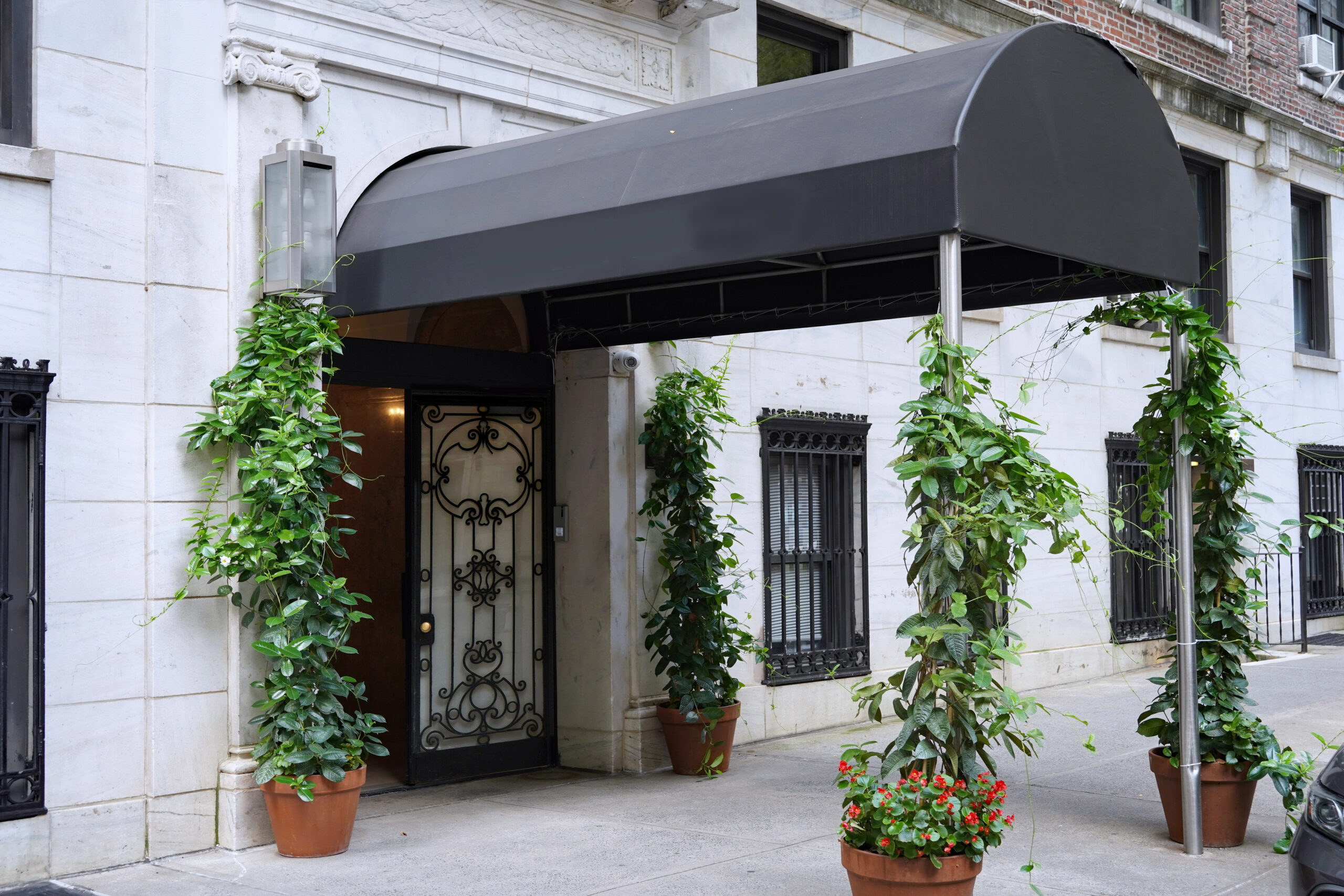
Some New York City apartment houses really know how to make an entrance.
Ever since apartment buildings replaced many of the city’s private homes, architects and developers have used striking entryways to establish a certain tone and create curb appeal. Now, Posh Portals by Andrew Alpern — published by Abbeville Press — highlights 140 of the most elegant entrances in New York luxury real estate. Featuring photographs by Kenneth G. Grant and watercolor illustrations by Simon Fieldhouse, the volume explores 130 years of apartment house architecture history, from the classical to the modern.
Among the notable buildings featured are the West 67th Street Artists’ Colony Historic District, Alwyn Court, and works by famed architects and designers including McKim, Mead & White, Rosario Candela, and Emery Roth.
The affable and articulate Alpern worked as an architect for thirty years before attending law school in his early fifties to practice law. Throughout his career, he continued writing books about New York City apartment house architecture — this marks his 11th publication on the subject.
“What I’m really trying to do with this book and with all my books is get New Yorkers to look,” says Alpern. “To use their eyes, look at the buildings, look at the details, look up at them, and go across the street and look at them from far away and see what the architect has done at the top of the building. Look at the whole thing and get an appreciation for the absolutely fantastically wonderful architecture that we have here in New York City.”
Here, Alpern shares some of his favorite entrances from six different architectural eras:
Nineteenth Century
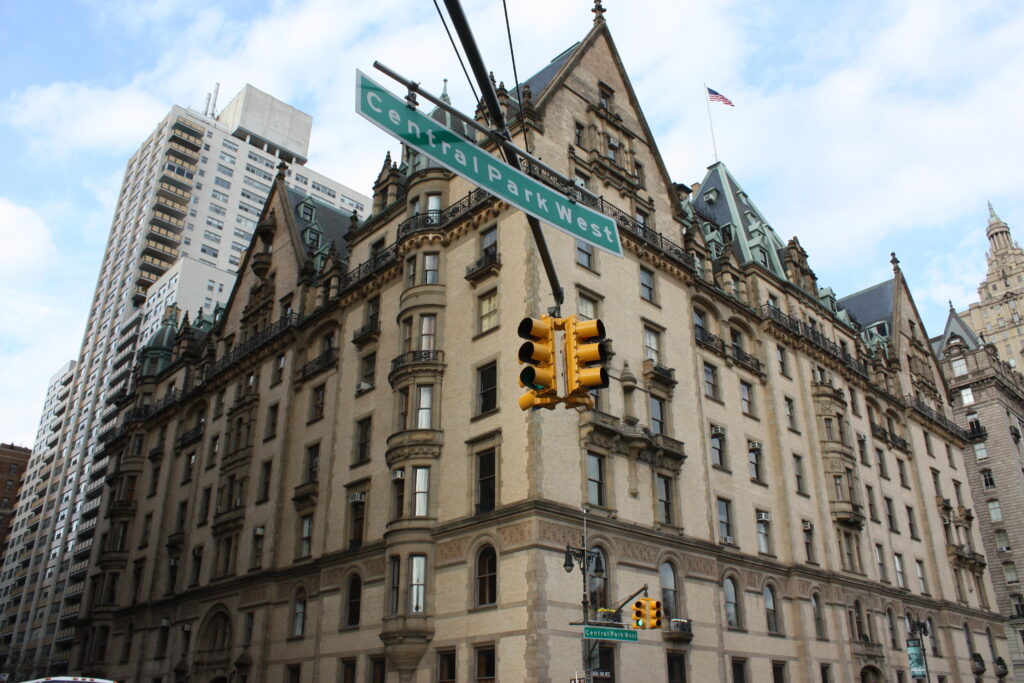
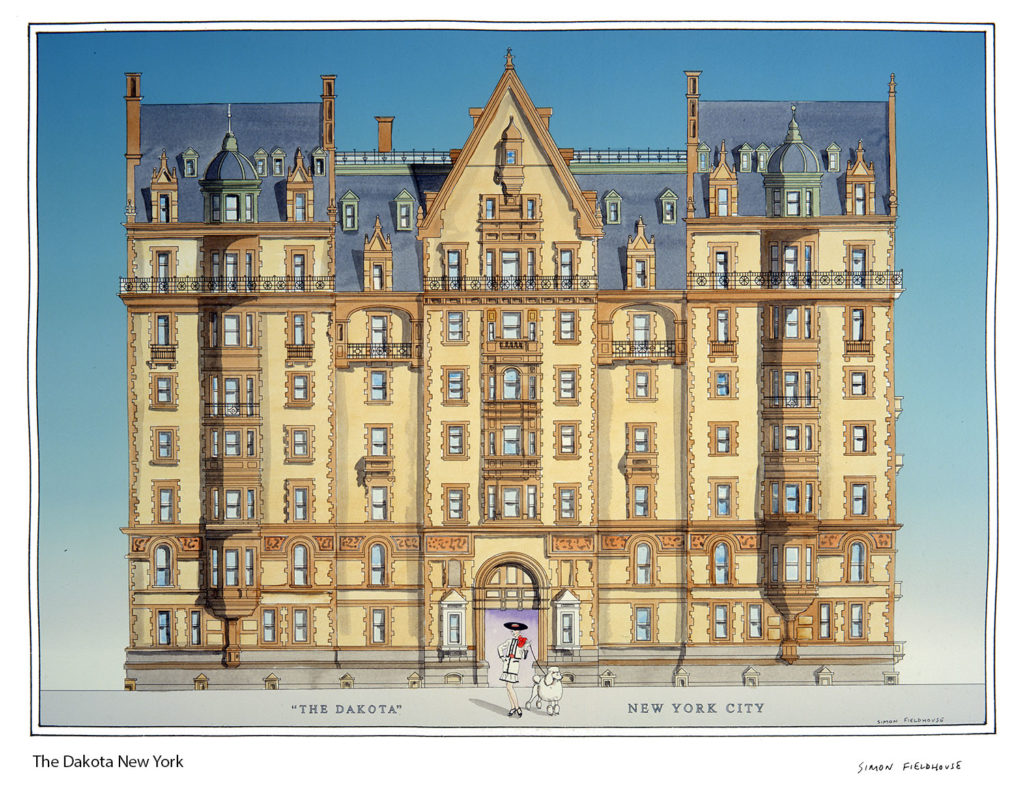
The Dakota – 1 West 72nd Street
Built in 1884 by architect Henry Janeway Hardenbergh for Singer Sewing Machine president Edward Clark, The Dakota was the city’s first luxury apartment building designed to attract wealthy residents out of their private homes.
At the entrance, a monumental two-story arch contains a high archway that leads into an interior courtyard. On each side of the entrance, ornate gas lamps — which still function today — illuminate the facade.
“It’s very elegant,” says Alpern. “If you drove up to this building in 1884 in your carriage, you would be very impressed.”
Turn of the Century
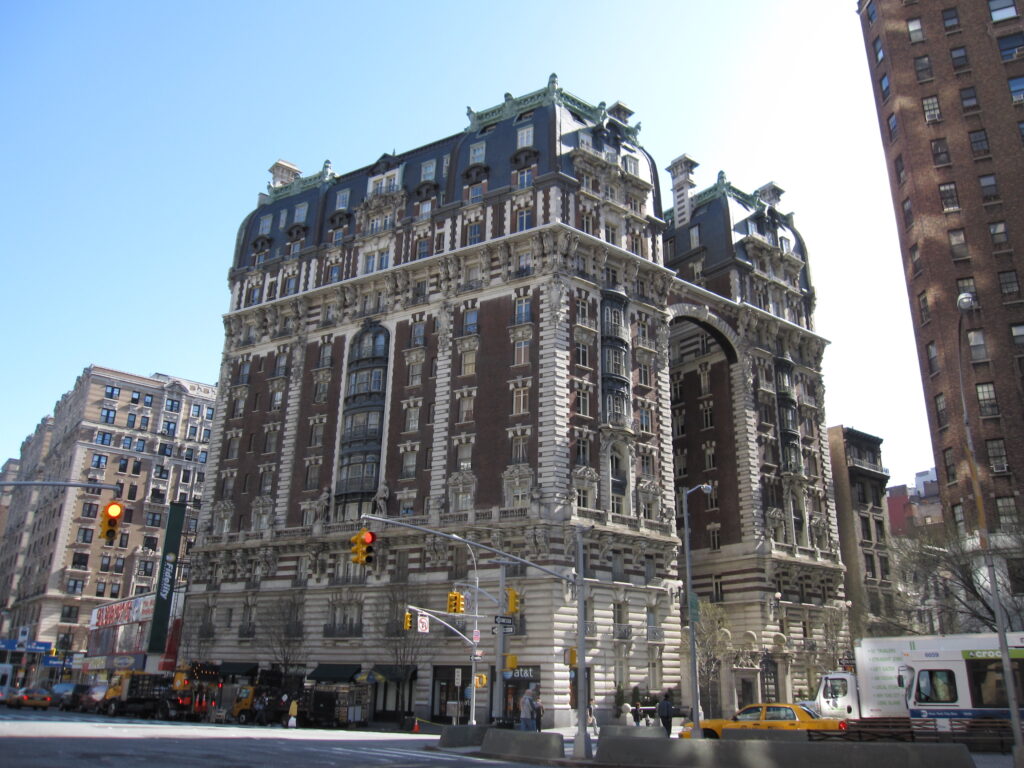
The Dorilton – 171 West 71st Street, 1902
This white limestone and pink brick Beaux-Arts colossus was built in 1902. Gates on either side of its entrance are now shut, but originally they remained open so a carriage could drive directly into the courtyard.
The gates are framed by limestone posts topped with giant balls while cherubs play in the center. “It’s grandiose in the extreme,” says Alpern.
Farther up the facade, carved limestone sculptures of muscular men support ornate balconies while draped female figures stand guard.
Edwardian
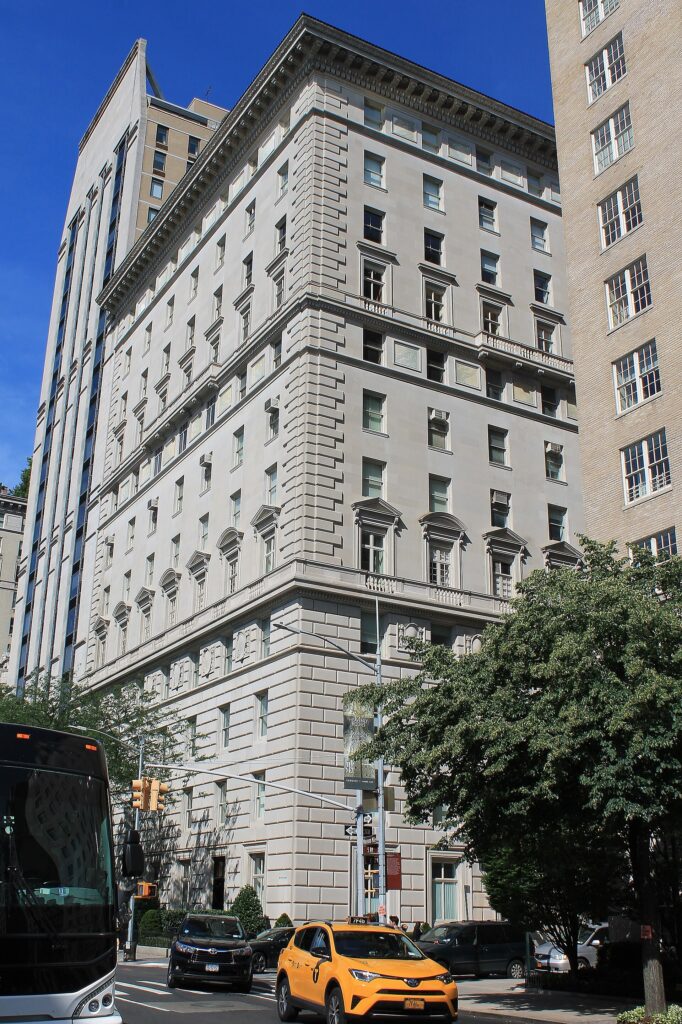
998 Fifth Avenue
Located across from Metropolitan Museum of Art, this building — designed by McKim, Mead & White in 1912 — was the first luxury apartment house on Fifth Avenue.
A unique 51-foot-long iron-and-glass marquee stretches over its entrance on East 81st Street.
“It’s very grand. And it’s practical because you’re undercover the minute you get out of your car,” says Alpern.
Behind the large cast-iron gates, which are closed at midnight, a smaller pair of bronze-and-glass doors lead into a refined marble lobby.
The 1920s: The Golden Age of New York Apartment Houses
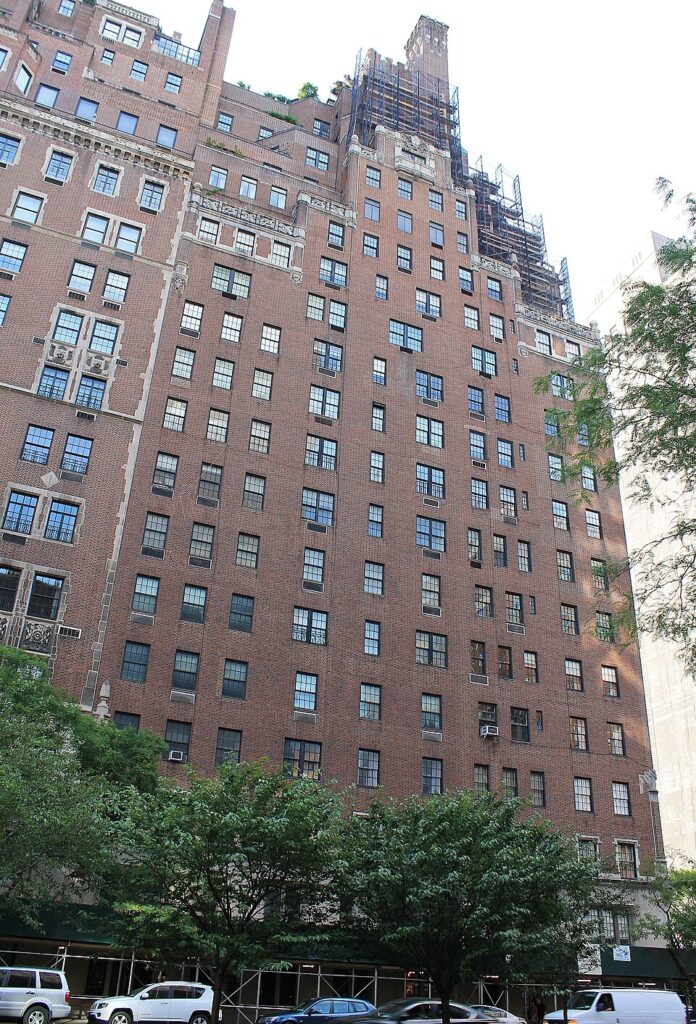
730 Park Avenue
Architects Lafayette Goldstone and Frances Burrell Hoffman Jr. placed the entrance of this 1929 building on East 71st Street and designed a stylized facade inspired by an English Renaissance country house.
The carved limestone entrance rises five stories up the building’s front. Flat vertical pilasters ascend for three floors before meeting a horizontal entablature above the third-floor windows. A broken Baroque pediment with scrolls on each side is capped with carved animals and an obelisk.
“The whole thing is totally over the top,” exclaims Alpern.
Art Deco
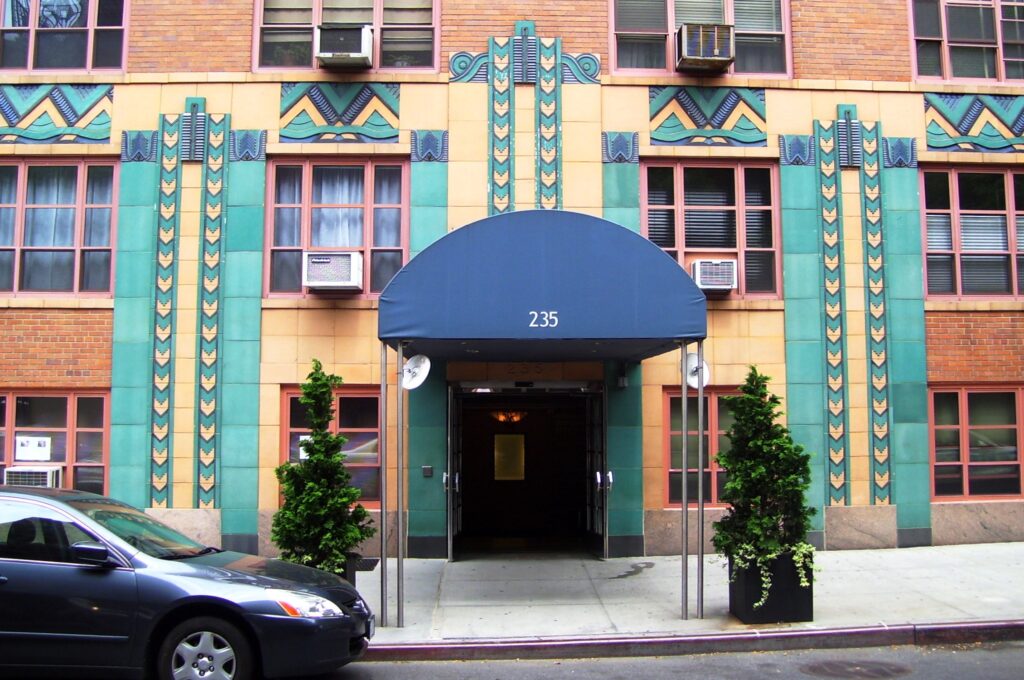
Gramercy House – 235 East 22nd Street
With the 1930s came the sleek modernity of Art Deco. Completed in 1930 by architects George Blum and Edward Blum, this building “is Art Deco with a vengeance,” says Alpern. “It brings a smile.”
Terra cotta — baked clay that is less expensive than limestone — can be glazed in a wide range of colors. Bright blue and aqua terra cotta chevrons were paired with rose-colored brick for a vibrant composition.
In a whimsical note, Alpern speculates that the vertical shape rising over the awning was inspired by an architect’s T-square.
Modern
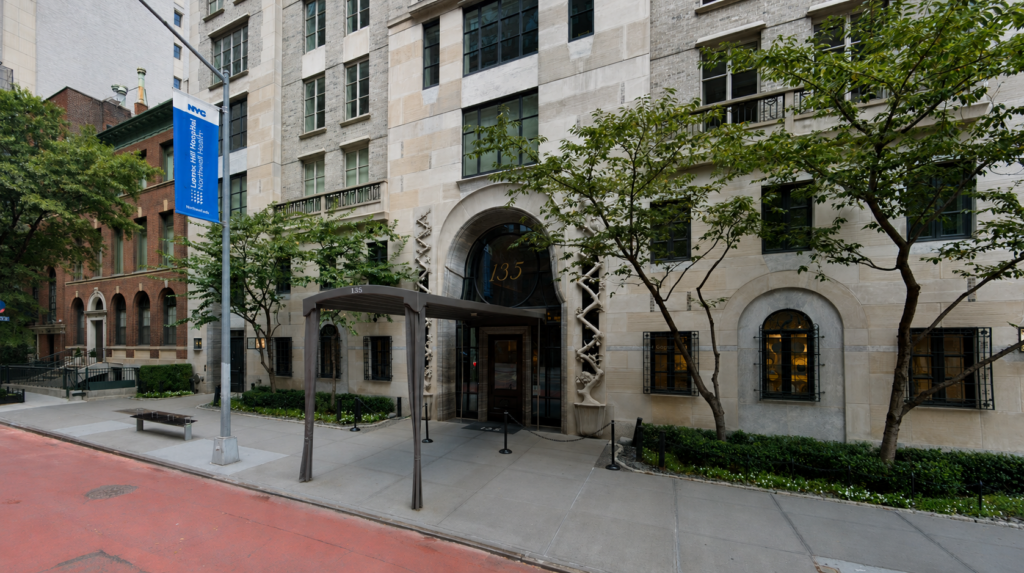
135 East 79th Street
Designer William Sofield cleverly reinterpreted traditional apartment house elements for this sophisticated 2014 building.
Here, the typical canvas awning and gathered drapery around its poles are rendered entirely in metal. The standard potted trees flanking the entrance have been carved in limestone, while a two-story limestone pear tree vine populated with animals and birds was carved by Sofield himself.
Under the metal awning, the doorway is enclosed by a marble frame. Above it rises a graceful two-story glazed marble arch angled to showcase its handsome striations.
“There is so much subtlety in the way Bill has handled the entire facade,” observes Alpern. “The old is made new.”
Leave a Reply