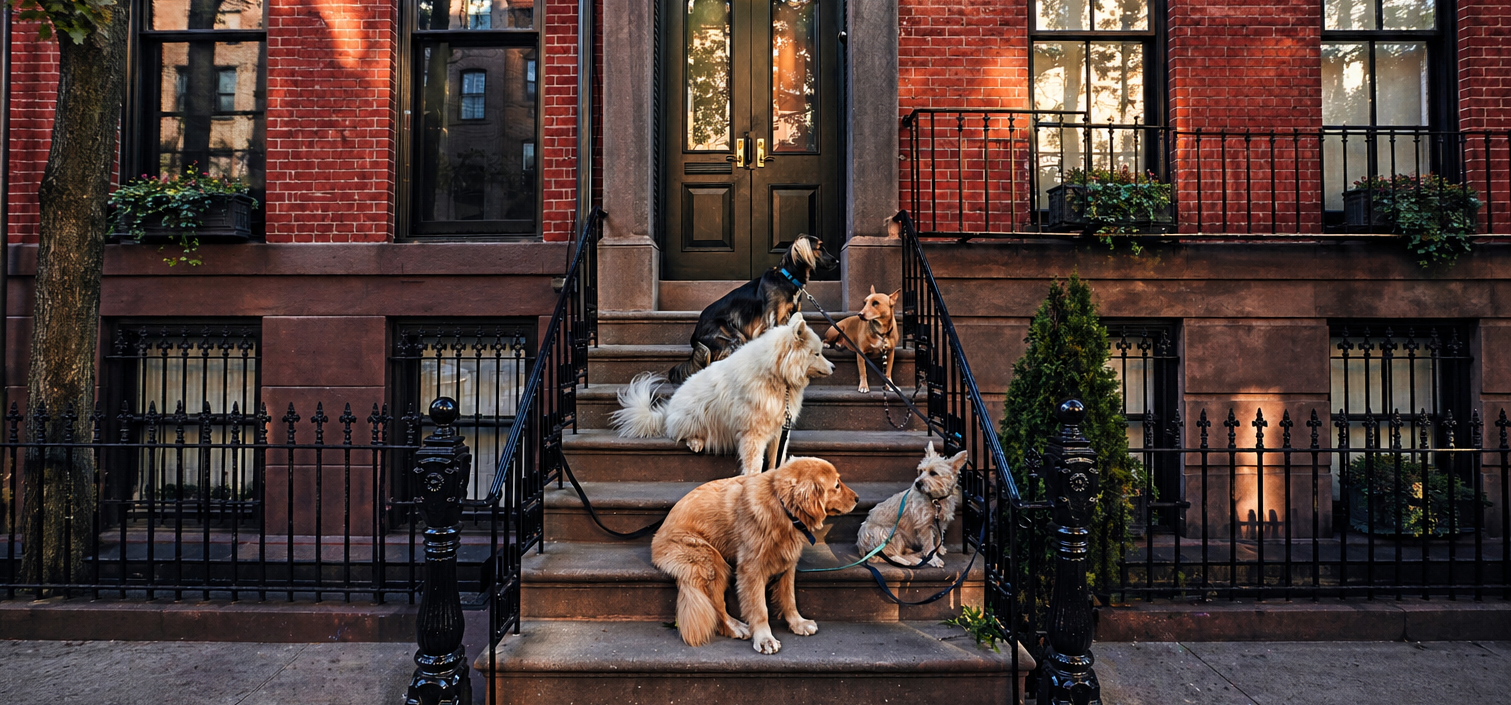
The idea for this piece began with a recent sale I had on the Upper East Side. While the buyer’s dog was not classified as an “aggressive” breed, he exceeded the building’s weight limit. Does the board do a weigh-in? Would a pet owner ever consider not moving because of pet policy restrictions?
In New York City real estate, we often say, “It’s not just about the apartment—it’s about the building.” Nowhere is that more true, or more entertaining, than when it comes to pet policies.
If you think “pet-friendly” simply means you can bring your dog or cat, think again. In NYC co-ops and condos, the rules can range from reasonable to downright quirky.
Let’s take a walk through some of the most memorable pet policies I’ve encountered over the years.
The Pet Interview: Yes, Your Dog Needs to Impress the Board
In many co-ops, it’s not just the buyer who gets interviewed—the pet does too.
I’ve seen dogs required to:
- Walk calmly on a leash
- Sit on command
- Demonstrate a “good temperament”
- Use designated pet entrances instead of the main lobby
One memorable pup breezed through the process like a seasoned professional, while the owner was far more nervous than the dog. Safe to say, the dog was approved immediately.
Cats are typically allowed, but questions often arise: How many are too many? What breeds? Are they vocal?
Too Big? Too Bully?
Here’s where NYC pet policies get especially interesting—and sometimes confusing.
“No stated weight restrictions” does not necessarily mean no restrictions at all. Instead, many buildings enforce breed-specific rules. Even gentle giants may fall into restricted categories, including:
- Doberman Pinschers
- German Shepherds
- Akitas
- Pit Bulls
- Rottweilers
- Chows
- Bullmastiffs
That said, it is not always entirely black and white. Boards often reserve the right to review and approve pets on a case-by-case basis, especially when temperament is in question. In other words, your dog may still need to make a strong impression.
A Classic NYC Twist: The Grandfather Clause
Any dog already living in a building before new rules are implemented is typically grandfathered in, as long as it does not exhibit aggressive behavior.
Yes, that means you might find a well-behaved Rottweiler in the elevator, living peacefully under legacy status.
Rabbit Rescue… But Only Sometimes
Cats and dogs are usually straightforward. Rabbits, however, can be a different story.
Some buildings:
- Allow rabbits only if they are rescues
- Limit the number of small animals
- Require board approval for anything outside the “standard” pet category
There have even been cases where owners needed to present their rabbit’s backstory.
Exotic Pets: Where Do We Draw the Line?
NYC buildings have seen it all. According to insights from The Center for Avian & Exotic Medicine, unusual pets in city apartments have included:
- Snakes
- Parrots
- Iguanas
- Tortoises
- Bearded dragons
- Servals
- Boa constrictors
- Macaws
While condos tend to be more flexible, co-ops often draw a firm line at anything considered “exotic.”
One board member once asked, “Will it ever get bigger than the apartment?”—a fair question when discussing certain reptiles. Still, many exotic pets are quiet and low-maintenance, raising the question of whether they should be excluded at all.
The Weight Limit Debate
“Dogs under 30 pounds only.”
It sounds simple—until you consider:
- Puppies grow
- Scales vary
- Some dogs are simply larger by nature
Clients often ask, “What if my dog is 32 pounds?” or even, “What if she’s a 100-pound gentle giant?”
Some buildings are flexible, while others are strict. Larger dogs may face additional restrictions, such as using service elevators or avoiding common areas like the main lobby.
Service Animals and Emotional Support Animals
Service Animals
Under the Americans with Disabilities Act and the Fair Housing Act:
- A service animal is not considered a pet
- Buildings must allow service animals as a reasonable accommodation
- “No pet” policies do not apply
Service animals are typically trained to perform specific tasks, such as guiding, alerting, or assisting with mobility.
Emotional Support Animals (ESAs)
This is where things become more nuanced:
- ESAs are not covered under the ADA but are protected under the Fair Housing Act
- Buildings generally must allow them with proper documentation from a licensed healthcare provider
- Boards may request documentation and deny requests that are not legitimate
What Boards Can Still Do
Even with valid accommodations, boards can:
- Deny animals that pose a direct threat
- Require proper behavior and control
- Take action in cases of damage or disturbance
In practice, many NYC co-op boards handle these situations carefully. Legitimate service animals are rarely challenged, while ESAs may face closer scrutiny.
DNA Testing: Yes, It’s a Thing
Welcome to modern pet ownership in NYC.
Some buildings now require:
- DNA registration for dogs
- Breed identification (especially for mixed breeds)
- Documentation of temperament
This allows buildings to track accountability, particularly in shared outdoor spaces.
So… What Does “Pet-Friendly” Really Mean?
In NYC, “pet-friendly” is never one-size-fits-all.
Every building has its own:
- Rules
- Nuances
- Interpretations
Understanding these policies before buying or selling is essential. The right strategy can make all the difference—not just for you, but for your pet.
Final Thought
Real estate in New York is always about people, but sometimes it is also about pets.
Whether it is a board interview, a weight limit, or a rabbit with a detailed backstory, one thing is certain: there is never a dull moment.
Thinking about buying or selling in a pet-friendly building? I’m always here to help you navigate the details—and the occasional pet policy curveball.
REAL VALUE, REAL ESTATE RESULTS
Your next chapter begins with the best possible outcome.
Leave a Reply